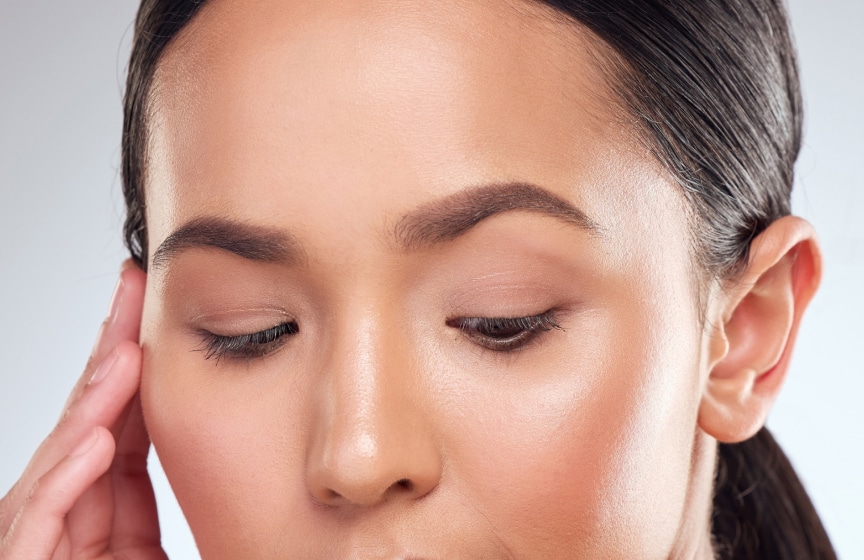
One of the most common concerns about endoscopic brow lifts is that they don’t produce dramatic results. But in brow lift surgery, dramatic isn’t the goal.
Much of the skepticism around the endoscopic approach comes down to technique. Results and longevity depend heavily on the surgeon’s training in endoscopic methods and on the fixation used to hold the brow in its new position. In experienced hands, the endoscopic approach can deliver natural, long-lasting results. In more than 3,000 brow rejuvenation procedures over 32 years, I have never needed to convert to an open approach.
By comparison, the traditional open (coronal) brow lift uses a long incision across the scalp. While effective, it carries a higher risk of a visible scar, lasting numbness of the scalp from involvement of the supraorbital nerve, and prolonged itching. The endoscopic technique uses a few small incisions hidden within the hairline, which helps reduce these risks.
When the brow descends over time, it presses down on the tissue above the upper eyelid, which creates hooding and a heavy, tired look. A brow lift repositions the brow back to a more balanced position. That lifts the pressure off the upper eyelid area, which is why the eyes often look more open, the forehead reads as lighter, and the overall face looks more rested. All while preserving natural facial proportions and expression.