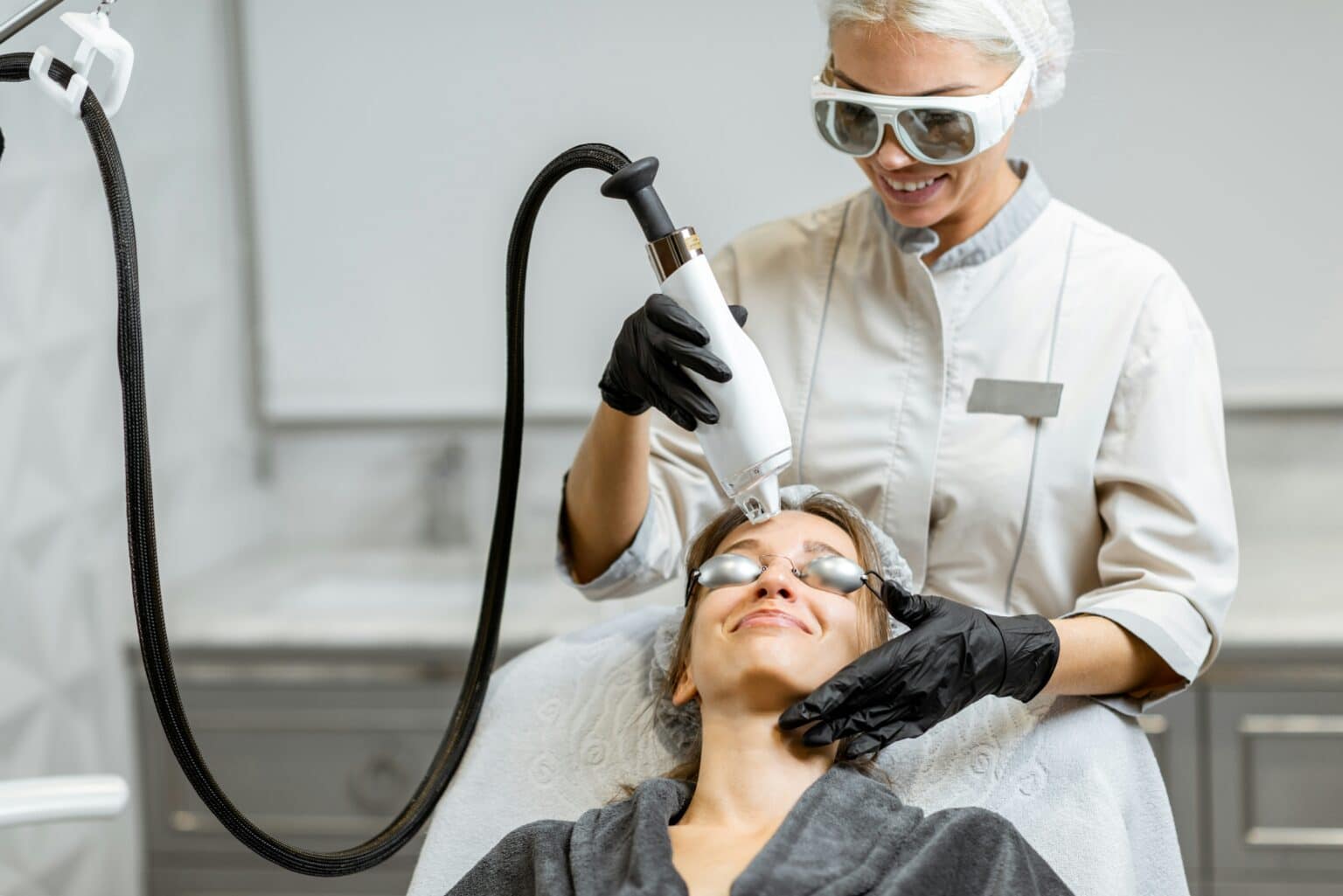
Aesthetic provider performing a laser facial treatment on a smiling patient wearing protective eyewear, representing BBL or Moxi therapy.

How Often Should I Be Getting a HALO® Laser Treatment?

Overview

The question always comes after the first HALO® treatment, usually a few weeks out, once the new skin has settled and the difference is obvious in daylight. The answer depends on how much damage we were correcting to begin with. A HALO® laser treatment is maintenance for some patients and correction for others, and those two run on completely different calendars. 

What makes the interval adjustable

HALO® is a hybrid fractional laser, which combines ablative and non-ablative energy in a single pass. That combination is what makes it tunable. Your provider can run a lighter pass on a face that just needs maintenance, or a deeper pass on skin that hasn’t been treated in years. Same device, different settings, different intervals. Come in too often and you’re pushing skin that didn’t need pushing. Wait too long and you’re correcting the same damage twice.

How often you actually come back

An annual HALO® is the interval that holds. Think about it the way you think about the dentist. You don’t wait until there’s a cavity to go in, you go routinely so things stay in check. A treatment every year keeps collagen production active and keeps working on sun damage, finer lines, and wrinkles, instead of letting all of it re-accumulate and turn your next appointment into a correction.

What moves that date is what you do between visits. Medical grade skincare and daily SPF extend how long a single treatment holds, and the patients who stay consistent with both tend to arrive at the twelve month mark maintaining rather than starting over. Every plan is built around your skin, your lifestyle, and your goals, so the version of annual that fits you gets set with your provider, not from a chart.

Why your interval won't match anyone else's

Two patients can walk out of the same treatment room and get different return dates. Three things drive that.

  • How much damage you started with. Untreated skin needs more correction up front, and the annual visit gets lighter once it’s caught up
  • Your skin type. Higher Fitzpatrick types are more prone to post-inflammatory pigment after resurfacing, so I space treatments further apart and run a pigment-suppressing protocol before and after
  • How deep we went. A more aggressive session corrects more in one pass and buys longer before the next, at the cost of more downtime

That last one is a tradeoff, not a setting. You can go deeper and come back less often or stay conservative and come back sooner. It changes your calendar and your recovery, and it’s the biggest single factor in how often you come back.

What patients often get wrong

The first mistake is judging the result too early. HALO® keeps working after the visible peeling stops. Collagen remodeling continues for three to six months, so the skin you see at week four is not the skin you’re deciding about. Patients who add an unplanned session on top of what was scheduled are usually chasing a result that hadn’t finished arriving.

The opposite mistake costs more. Someone has one excellent treatment, then disappears for three years. The improvement was real, but resurfacing doesn’t stop the clock. Collagen production slows again, new sun damage accumulates, and the concerns we corrected drift back toward where they started. Daily SPF and consistent skincare slow that drift considerably. Skip them and you’ll be starting close to baseline at your next appointment, which means starting over with a correction instead of a single maintenance pass.

What to ask at your consultation

Ask two things: how aggressive is this treatment, and when should I come back? You want an actual date and the reason behind it, tied to your pigment, your texture, and your sun history. A schedule that would fit anyone isn’t yours.