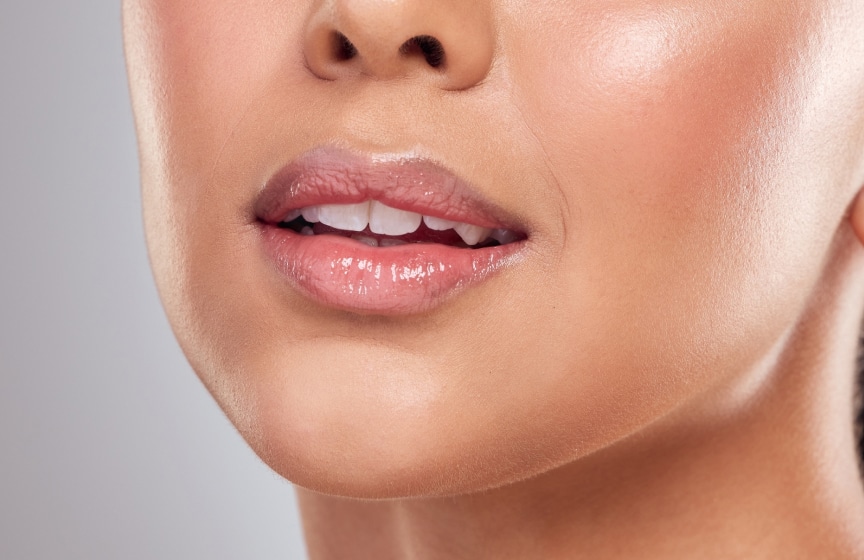

Close-up of a woman’s lips and lower face with smooth skin

Is a Lip Flip the Right Choice For You?

Overview

Most patients who come in asking about a lip flip have one of three things in mind: they want their upper lip to show more when they smile, they’re nervous about filler, or a friend got one and looked subtly different in a way they liked.  A lip flip can deliver on all three, but only for the right lip. Here’s how to tell if it’s yours. 

Look at your lip when you smile, not when it's at rest

A lip flip works by relaxing the muscle that pulls your upper lip down and inward when you smile. The pink part of the lip rolls outward, showing more of itself. If your upper lip looks fine when your face is relaxed but seems to disappear, curl under, or thin out when you smile or talk, that’s the pattern a lip flip is designed for. 

If your upper lip is small at rest, no amount of muscle relaxation will give you a bigger lip. The flip can only change how an existing lip presents. It can’t add volume that isn’t there. 

You're a strong candidate if any of these apply

A short series of patient patterns I see weekly in my chair: 

  • A “gummy” smile where too much upper gum shows when you smile 
  • An upper lip that visibly curls inward when you smile, even if it looks normal at rest 
  • An upper lip that looks noticeably thinner in smiling photos than it does at rest 
  • A first-time injectable patient who wants a subtle change with a short commitment 

You're probably not the right candidate if

Patients with a genuinely small upper lip at rest, significant lip asymmetry, or a profession that depends on precise lip movement may not be ideal candidates. The lip flip can temporarily affect words with hard consonants for some patients, and that effect is more noticeable for singers, public speakers, and wind instrument players. Patients who want a result that lasts longer than two to three months are also better served by filler. 

What the result actually looks like

Subtle. That’s the honest word. The lip flip is one of the most misunderstood procedures in aesthetics because patients often expect it to do more than it’s designed to do. It changes one specific moment: the moment you smile. Patients who expect filler-level results from a flip leave disappointed. Patients who understand they’re refining a smile, not building a lip, leave happy. 

What to ask at your consultation

Show your provider a video of yourself talking and smiling, not just a still photo. A lip flip changes how your upper lip moves, and a still image can’t capture that. Ask which muscle they plan to treat and how many units they intend to use. A specific answer, a named muscle and a clear dose, means they have assessed your lip and built the plan around how it moves. That is what keeps the result subtle and still recognizably yours.