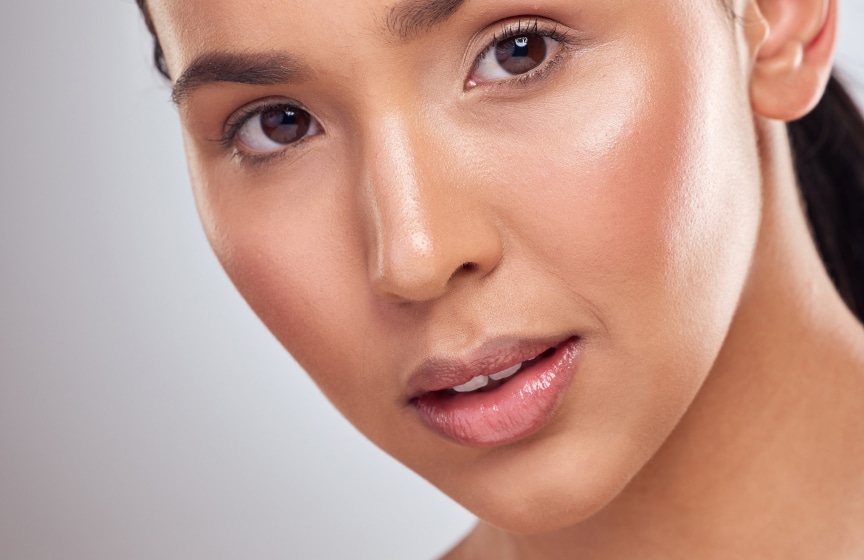
Close-up of healthy facial skin illustrating the smoother, brighter complexion commonly associated with microneedling treatments.

Microneedling: The Step That Multiplies Your Skincare Results

Overview

Most patients walk into my room with a skincare routine they’ve spent real money building. Cleanser, serum, retinol, moisturizer, SPF. They’re frustrated because they aren’t seeing the results their products promise. The answer is almost always the same: the product is fine. It just isn’t getting where it needs to go. That’s the gap microneedling closes. 

Why your skincare isn't pulling its weight

The skin’s outer layer is designed to keep things out. That’s a feature, not a bug. But it also means that most of what you apply on top sits there, gets absorbed slowly, or doesn’t make it past the surface at all. Even active ingredients designed to penetrate deeper struggle to reach the layers where they can do measurable work. The serum is working. It just isn’t reaching the part of the skin that responds to it. That’s why patients are often surprised when a product they’ve used for years suddenly seems more effective after microneedling. The formula didn’t change. The delivery did. 

What microneedling actually does

Microneedling creates thousands of microscopic channels in the skin using a device with very fine needles. Two things happen at once. First, the channels allow topical products applied immediately after treatment to penetrate dramatically deeper than they normally would. Second, the controlled micro-injury signals the skin to ramp up collagen and elastin production as part of its normal wound healing response. You get better product absorption and a thicker, firmer dermal foundation underneath. Both effects compound over a series of treatments.

What to pair it with

The product applied immediately after a microneedling session matters more than the product applied any other day of the month. Growth factor serums, peptides, and hyaluronic acid are the most common pairings because they’re designed to support repair and hydration in skin that’s actively rebuilding. Retinoids and stronger actives are typically paused for several days on either side of treatment. Your provider should give you a specific list, not a general recommendation. 

What to expect after

Most patients have redness similar to mild sunburn for 24 to 72 hours, depending on depth. Skin can feel tighter or slightly rough for two to three days as it heals. Visible texture improvement starts around three to four weeks in, with the strongest results coming after a series of three to six sessions spaced four to six weeks apart. 

What to ask at your consultation

Ask which device your provider uses, what depth they treat at for your specific concerns, and what they recommend applying in the 48 hours after. The depth and post-treatment regimen are where the results are made. A provider who can answer those three questions clearly is one working from a real plan.