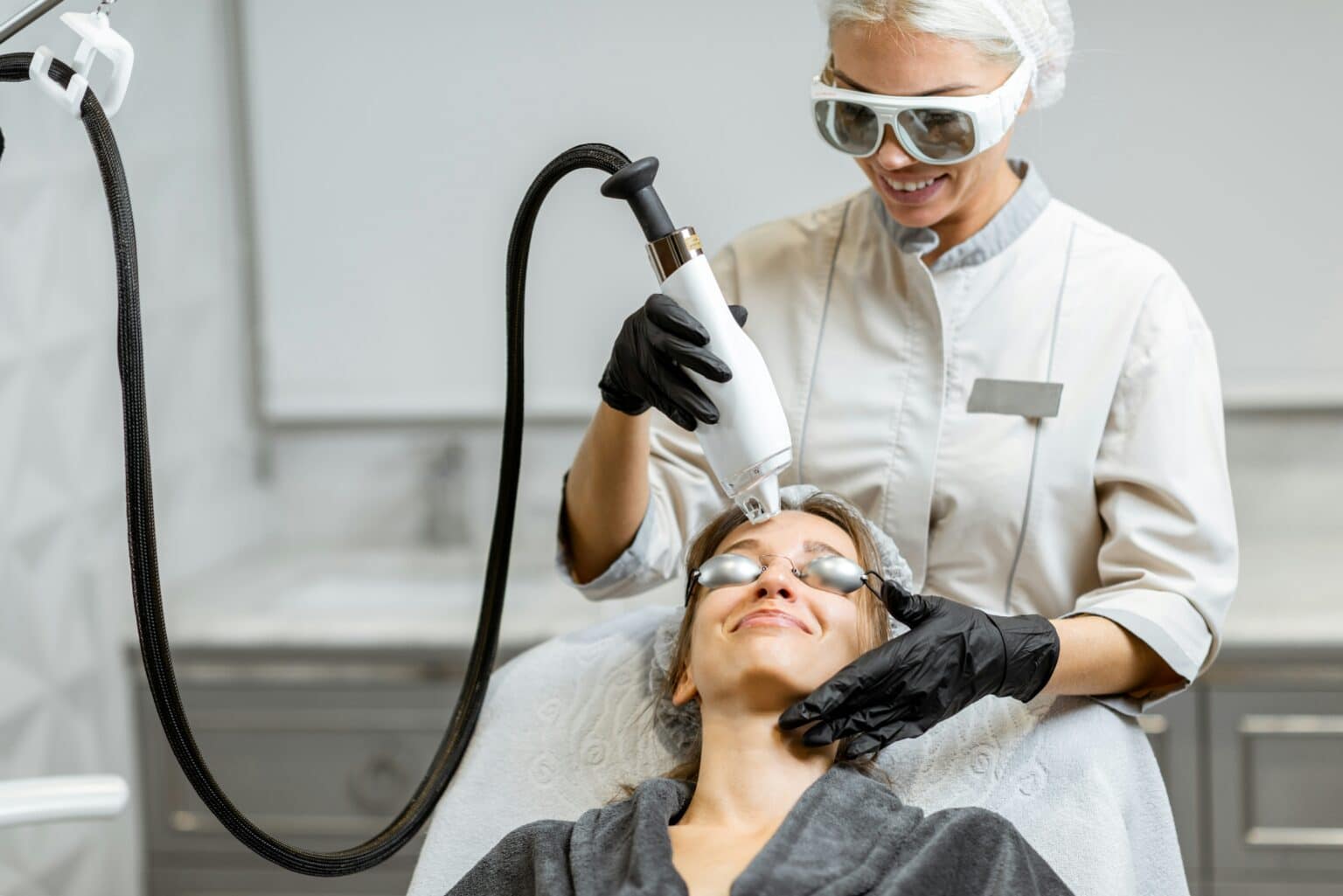
Aesthetic provider performing a laser facial treatment on a smiling patient wearing protective eyewear, representing BBL or Moxi therapy.

What Is BBL (BroadBand Light) Therapy? What It Treats – Redness, Sun Damage, Acne, Texture – Plus Results, Cost and What to Expect

TL;DR Summary

BroadBand Light therapy uses intense pulsed light )IPL to target pigment and blood vessels in the skin. It treats redness and rosacea, sun damage and age spots, and can be used in protocols designed specifically for acne. Most patients see gradual improvement over a series of sessions. It’s non-ablative, so downtime is minimal.

Overview

The question comes up whenever a patient sees the acronym. What is BroadBand Light therapy, and what does it actually treat? BroadBand Light, often abbreviated as BBL, works well for the specific concerns it’s designed to address, including pigmentation and vascular redness. It isn’t the right tool for every skin concern, which is why understanding what the technology actually targets matters. 

What is BroadBand Light therapy, exactly? 

BroadBand Light uses intense pulsed  IPL a broad spectrum of wavelengths, to selectively target pigment and visible blood vessels in the skin. The light energy is absorbed by chromophores, including melanin in pigmented lesions and hemoglobin in blood vessels, producing a controlled response that allows those visible concerns to fade over time. 

It’s a non-ablative treatment, meaning the skin’s surface isn’t removed. That’s what allows for minimal downtime compared to more aggressive resurfacing treatments. 

What does a BroadBand Light facial actually involve? 

A typical session involves applying a cooling gel to the treatment area and then passing the handpiece across the skin. Sensation is often described as a mild rubber band snap. Treatment settings are adjusted based on skin type and the specific concern being addressed, since the parameters used for redness are different from those used for pigmentation. 

Because light-based treatments interact with pigment in the skin, appropriate patient selection and individualized settings are important, particularly when considering skin type, recent sun exposure, and the condition being treated. 

Improvement is usually gradual, and a series of treatments may be recommended depending on the concern being treated. Some patients notice visible change after the first session, but BroadBand Light is often better understood as a part of a treatment plan rather than a one-and-done procedure. 

What conditions can BroadBand Light actually treat? 

Several, but the strongest results come in specific categories. 

Redness and rosacea respond to the vascular targeting component. The light energy targets hemoglobin in visible blood vessels, which reduces both discrete vessels and the diffuse redness that’s harder to camouflage. 

Sun damage and age spots respond to the pigment targeting component. Treated spots typically darken briefly, then flake off and fade over the following days to weeks. Patients often notice this more dramatically than the vascular changes because the pigment shift is visible. 

BroadBand Light can also be used in protocols designed specifically for acne. Sciton’s Forever Clear BroadBand Light treatment uses different wavelengths in a multi-step approach to target acne-associated bacteria and inflammatory redness. Texture improvement may also occur, but patients whose primary concern is significant textural change or acne scarring may need a different or additional treatment approach. 

BroadBand Light is a specialist, not a generalist. The first question isn’t whether BroadBand Light is a good treatment. It’s whether it targets the concern you’re actually trying to improve. 

What's BBL HERO, and is it different from standard BroadBand Light? 

BBL HERO is a faster version of the same BroadBand Light technology. The underlying BroadBand Light principles remain similar, while HERO was designed to deliver treatments more rapidly across larger areas with enhanced cooling and higher-speed output. 

For full-face treatments or larger areas, HERO can make a single visit more practical than it would be with older-generation devices. Which version is used depends on the treatment area, the concern being addressed, and what the patient is comfortable with.