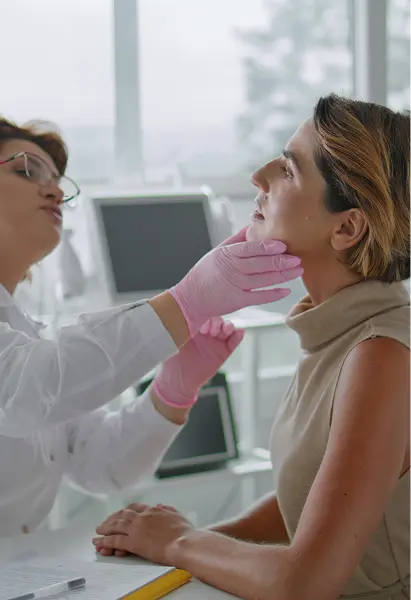
Medical provider examining a patient’s face during an aesthetic consultation

Melasma vs Hyperpigmentation: Why the Difference Changes Treatment

TL;DR Summary

Melasma and hyperpigmentation both cause darker patches on the skin, but they respond to treatment differently. Hyperpigmentation is an umbrella term for any darkening. Melasma is a specific form influenced by hormones, UV and visible light, and genetic factors, which is why both Melasma treatments  and Hyperpigmentation treatments used on other pigment types may not be appropriate for it.

Overview

Hyperpigmentation is a general term for any darkening of the skin. Melasma is one specific cause of it. The distinction matters because the two are driven by different mechanisms: post-inflammatory pigment follows an injury such as a breakout, sun damage accumulates over years of UV exposure, and melasma responds to hormones, heat, and visible light in addition to UV. A treatment that clears one can worsen another.

What hyperpigmentation is

Hyperpigmentation describes any area of skin producing more melanin than the tissue around it. It covers sun spots, post-inflammatory marks from acne or injury, age spots, freckles, and melasma. Each has a different cause, behavior pattern, and treatment response.

Many types respond to standard brightening protocols: daily sun protection, topical brightening ingredients such as vitamin C and niacinamide, prescription hydroquinone where appropriate, and lasers that target melanin at specific depths. That depth is set by the laser category, and the main types of laser skin treatments differ in how much heat they deliver and how much skin they cover.

What makes melasma different

Melasma typically appears as symmetrical patches on the cheeks, forehead, upper lip, or bridge of the nose. It is influenced by hormones, ultraviolet and visible light exposure, heat, and genetic susceptibility, which is why it can appear or intensify during pregnancy, with hormonal contraceptives, and through other hormonal changes.

Melasma is also reactive to stimulation of the skin. Treatments that work on sun spots, including stronger chemical peels, heat-based lasers, and high-intensity light devices, can cause melasma to darken rather than lighten. This is the point at which the two conditions diverge most in practice: the same treatment applied to two different types of pigment can produce opposite results.

Why the treatment approach differs

Treatment follows the cause of the pigment. With melasma, limiting triggers and avoiding unnecessary inflammation shape the entire plan. That generally means daily broad-spectrum sun protection, tinted where possible so that iron oxides block visible light as well as UV, topical brightening agents introduced gradually, and devices that treat pigment without generating significant heat. Oral tranexamic acid is used in selected patients after review of medical history and contraindications. 

Sun protection functions as treatment in melasma rather than as maintenance around it. Visible light alone can drive pigment production, which is why an untinted mineral or chemical sunscreen may not be sufficient on its own. 

Why melasma treatment stalls

Melasma recurs more often than most pigment conditions, and three factors account for the majority of cases that fail to hold.

  1. The first is treating melasma with a device selected for other pigment. Some laser and light treatments improve melasma in selected patients, but excess heat or inflammation can trigger recurrence or worsening. Device selection, treatment parameters, skin type, and the underlying diagnosis all determine whether a given device is appropriate.
  2. The second is inconsistent sun protection during active treatment. A topical or oral protocol paired with irregular sunscreen use leaves ongoing UV and visible light exposure working against the treatment, which contributes to recurrence.
  3. The third is changing treatments too quickly. Melasma responds slowly, and a course judged at six weeks may be assessed before any change is visible. Escalating to a more aggressive option at that point is one of the more common causes of worsening.

Heat is a trigger in more than one skin condition, which is also why timing plays a role in laser treatment for rosacea.

How the two are told apart

Melasma tends to appear as symmetrical or bilateral patches across the cheeks, forehead, upper lip, nose, or jawline, and often becomes more noticeable after sun exposure or hormonal change. Other forms of hyperpigmentation typically trace to a specific event: acne, irritation, injury, or years of accumulated sun exposure.

Surface appearance alone does not always separate them, and many patients have both. Pigment also sits at different depths, and depth affects which treatments can reach it. The pigment that responds fastest is usually the newest. Melasma present for years sits deeper and takes longer to shift, which is why duration of the condition matters as much as its appearance.