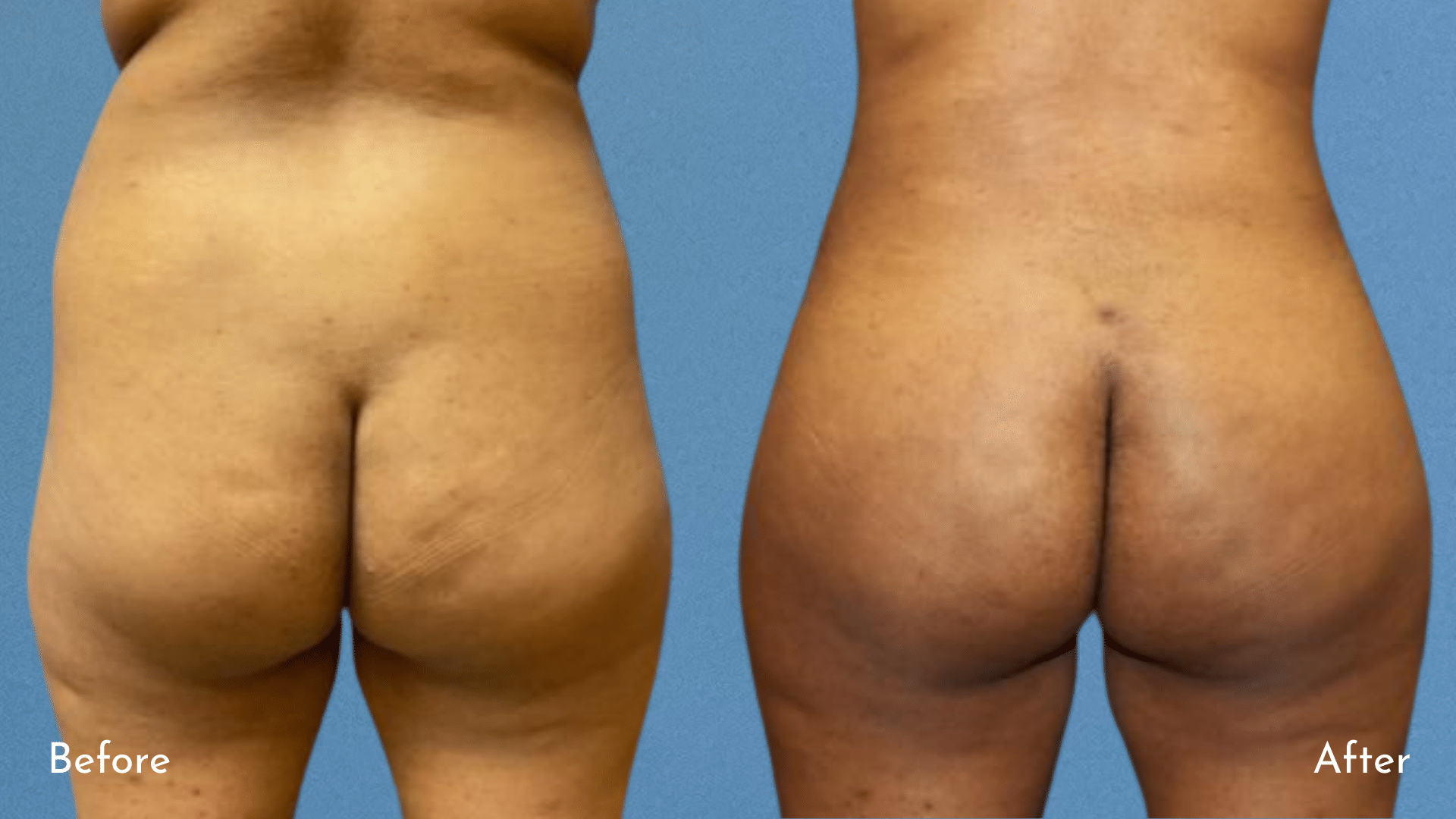
What is a Brazilian Butt Lift (BBL)?
BBL earned its safety reputation for a specific reason: fat injected into or near the deep gluteal muscles could enter the bloodstream and cause fatal complications. Modern Brazilian Butt Lift techniques differ substantially from earlier approaches, though outcomes depend on whether individual surgeons follow current safety recommendations. A Brazilian Butt Lift, medically known as gluteal fat grafting, uses your own fat to reshape and add volume to the buttocks through two components: liposuction to remove fat from areas like the abdomen, flanks, or thighs, followed by processed fat injection into the gluteal region. Because the fat is your own, no synthetic implant is involved.
Current professional practice advisories from the American Society of Plastic Surgeons (ASPS), the Aesthetic Society (ASAPS), and the International Society of Aesthetic Plastic Surgery (ISAPS) recommend that every injection remain in the subcutaneous layer, verified in real time with ultrasound guidance. Following these recommendations has significantly reduced the historical risk of fatal fat embolism. Surgeon board certification, facility accreditation, and adherence to these safety protocols matter more here than in nearly any other elective procedure. The question isn’t whether you should get a BBL. It’s who you’re letting perform it.