
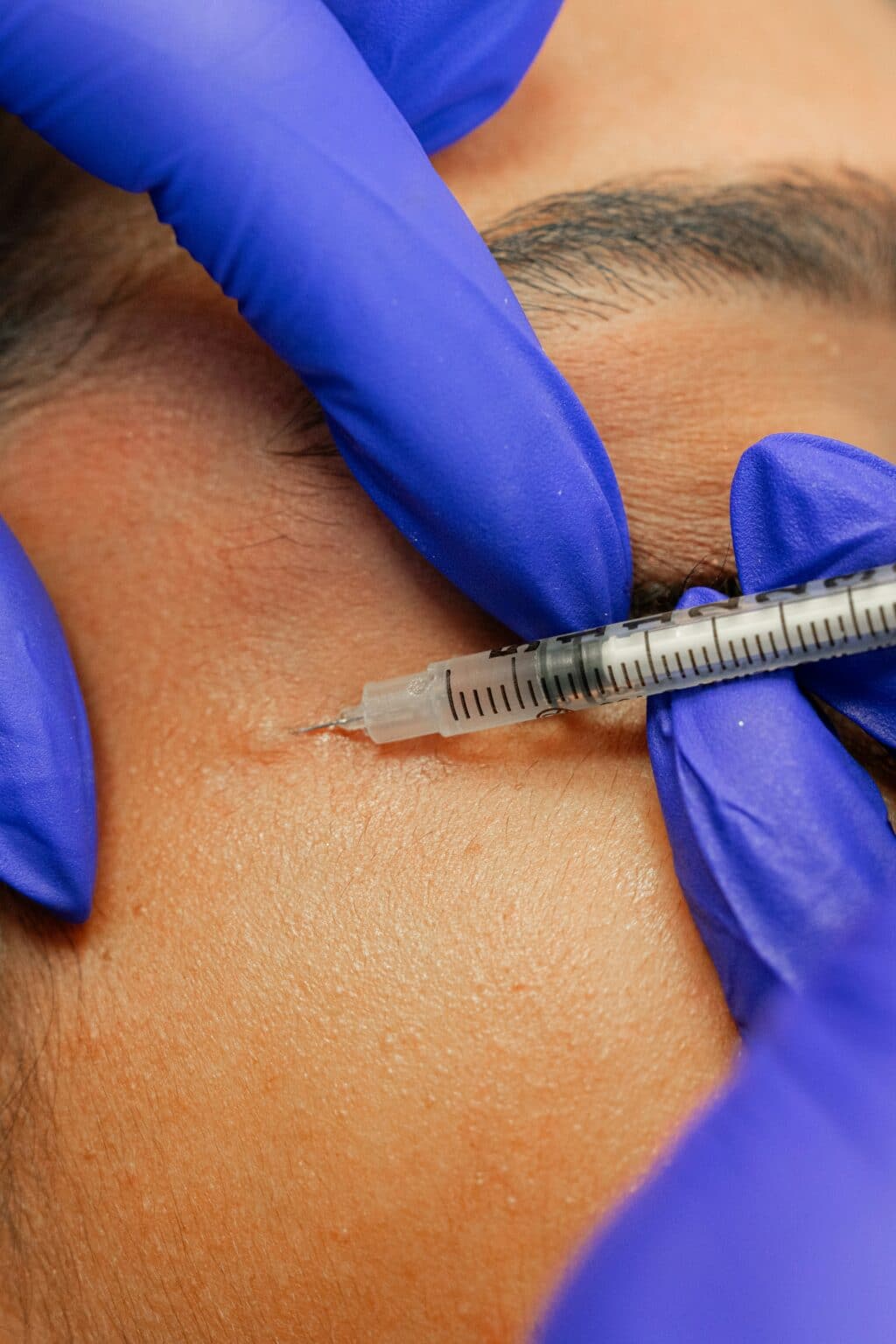
Botox vs. Dysport: Debunking 5 Common Myths with Quick Expert Answers

Meredith Keller
17 October, 2025
Botox or Dysport: What’s Really the Difference?
When it comes to wrinkle-relaxing injectables, Botox may be the household name, but it’s far from the only option. Dysport, another FDA-approved neuromodulator, has been gaining traction among both providers and patients for its subtle differences in onset, spread, and results. Still, there’s a lot of confusion and misinformation circulating about how Botox compares to Dysport for wrinkle reduction and facial rejuvenation. Are they the same? Is one stronger or more effective? Which lasts longer? And most importantly; which one should you choose?
In this article, we’re setting the record straight by debunking five common myths about Botox vs. Dysport. We’ll also provide quick, expert-backed answers to help you make an informed decision on your next injectable treatment.
Myth #1: Botox and Dysport Are Completely Identical
Truth: They’re similar, but not identical.
Botox and Dysport are both neuromodulators derived from botulinum toxin type A, used to temporarily relax targeted muscles and reduce the appearance of dynamic wrinkles. While their core function is the same, their formulations, diffusion patterns, and dosing units differ.
- Botox contains onabotulinumtoxinA
- Dysport contains abobotulinumtoxinA
These molecules are surrounded by different protein structures, which can influence how quickly they act, how far they spread, and how the body responds.
Our Expert Insight:
Dysport typically kicks in a little faster than Botox; often in 2-3 days versus 3-5 days for Botox; and may spread slightly more, making it great for broader areas like the forehead. Botox, on the other hand, is praised for its precise placement and control in smaller treatment zones.
Myth #2: Dysport Works Faster and Lasts Longer Than Botox
Truth: Dysport may work faster, but duration is very similar.
It’s true that many patients report faster onset of results with Dysport. This can be particularly appealing if you’re looking for a “quick fix” before a big event or want results to show up quickly.
However, when it comes to how long the effects last, the difference is negligible. Most studies and clinical experiences indicate both Botox and Dysport last around 3 to 4 months, depending on:
- The dosage
- The treatment area
- Your metabolism
- How expressive your facial muscles are
Some people feel Dysport fades a little sooner, while others report it lasts just as long, or even longer.
Our Expert Insight:
If you metabolize injectables quickly, your results may wear off faster regardless of brand. Talk to your injector about your treatment history to decide which is better for you.
Myth #3: Dysport Is Cheaper Than Botox Because It’s Weaker
Truth: Dysport isn’t weaker, it’s just dosed differently.
The myth that Dysport is cheaper because it’s less potent comes from a misunderstanding of dosing. Dysport units are measured differently than Botox units. While it often takes more Dysport “units” to match Botox in strength, the cost per unit is lower, meaning the total price ends up being comparable.
Example: 50 units of Dysport might be equivalent to 20 units of Botox in effect, and both
treatments might cost the same overall.
Our Expert Insight:
Both products are effective when used in the correct dose by a trained injector. Always
focus on results and safety over unit comparisons.
Myth #4: One Brand Always Looks More “Natural”
Truth: The final look depends more on the injector than the brand.
Patients often ask whether Dysport or Botox looks more “natural,” but the truth is, both can produce subtle, natural-looking results, or overly frozen appearances; depending on how they’re administered.
A skilled injector understands facial anatomy, proper dosing, and placement strategies that work best for your features and goals. Brand matters, but technique matters more.
Our Expert Insight:
If your injector uses both products regularly, they’ll guide you to the right choice based
on how each product performs in different facial zones; not based on hype or brand
loyalty.
Myth #5: Once You Pick One, You Can’t Switch
Truth: You can absolutely switch between Botox and Dysport.
There’s no rule saying you have to stick with the same brand forever. Some patients try Botox first, then switch to Dysport to compare; or vice versa. Others rotate between the two to see which performs best for their metabolism or facial structure.
That said, it’s important to stay with one provider who can track your history and results over time. Consistency in treatment planning is more important than sticking to one brand.
Our Expert Insight:
Feel free to try both if you’re curious. Just be sure to space treatments properly and communicate clearly with your injector.
So… Which Should You Choose?
The answer depends on your personal preferences, anatomy, and treatment goals. Both Botox and Dysport are safe, effective, and FDA-approved. In skilled hands, either can give you beautifully refreshing results.
Choose Botox if:
- You prefer a long-established brand with a proven track record
- You’re treating smaller, more targeted areas (e.g., glabella, crow’s feet)
- You want ultra-precise muscle control
Choose Dysport if:
- You want faster onset and a slightly softer, more diffused effect
- You’re treating larger zones like the forehead or want broader muscle relaxation
- You’re looking for a subtle change and a touch of natural movement
Can You Combine Botox and Dysport?
While most injectors stick with one product at a time, some experienced professionals may choose to combine Botox and Dysport in different areas of the face based on how each product performs. For example, an injector might use Botox for crow’s feet and Dysport for the forehead, capitalizing on the strengths of each formulation.
However, this should only be done by a highly skilled, board-certified provider who understands both products intimately. Mixing brands within a single treatment area is generally avoided to prevent unpredictable outcomes.
How to Get the Most Out of Your Treatment
Whether you choose Botox or Dysport, you can extend the results and protect your investment by:
- Following all post-treatment instructions
- Avoiding rubbing or massaging the treated areas for at least 24 hours
- Staying upright for several hours after your appointment
- Avoiding intense heat or workouts for the first day
Some patients also use complementary treatments like microneedling, chemical peels, or light-based therapies to further enhance their skin’s overall appearance.
What About Side Effects?
Both Botox and Dysport are well-tolerated, but mild side effects can occur:
- Redness, swelling, or bruising at the injection site
- Headaches (more common in first-time users)
- Drooping eyelid or eyebrow (rare and temporary)
- Asymmetry (usually correctable in follow-up)
Severe side effects are rare when the procedure is performed by a qualified professional. Always disclose your full medical history and current medications before receiving treatment.
Final Thoughts: It’s All About the Injector
Whether you choose Botox or Dysport, the most important factor in your results is who performs your treatment. If you’re also weighing Botox vs. filler as part of a broader treatment plan, that same principle applies. An experienced, licensed provider who takes a personalized approach will deliver the most natural and satisfying results, regardless of the brand.
Subscribe to get updates
Stay informed about our latest offerings and news.
By subscribing you agree to our Privacy Policy.